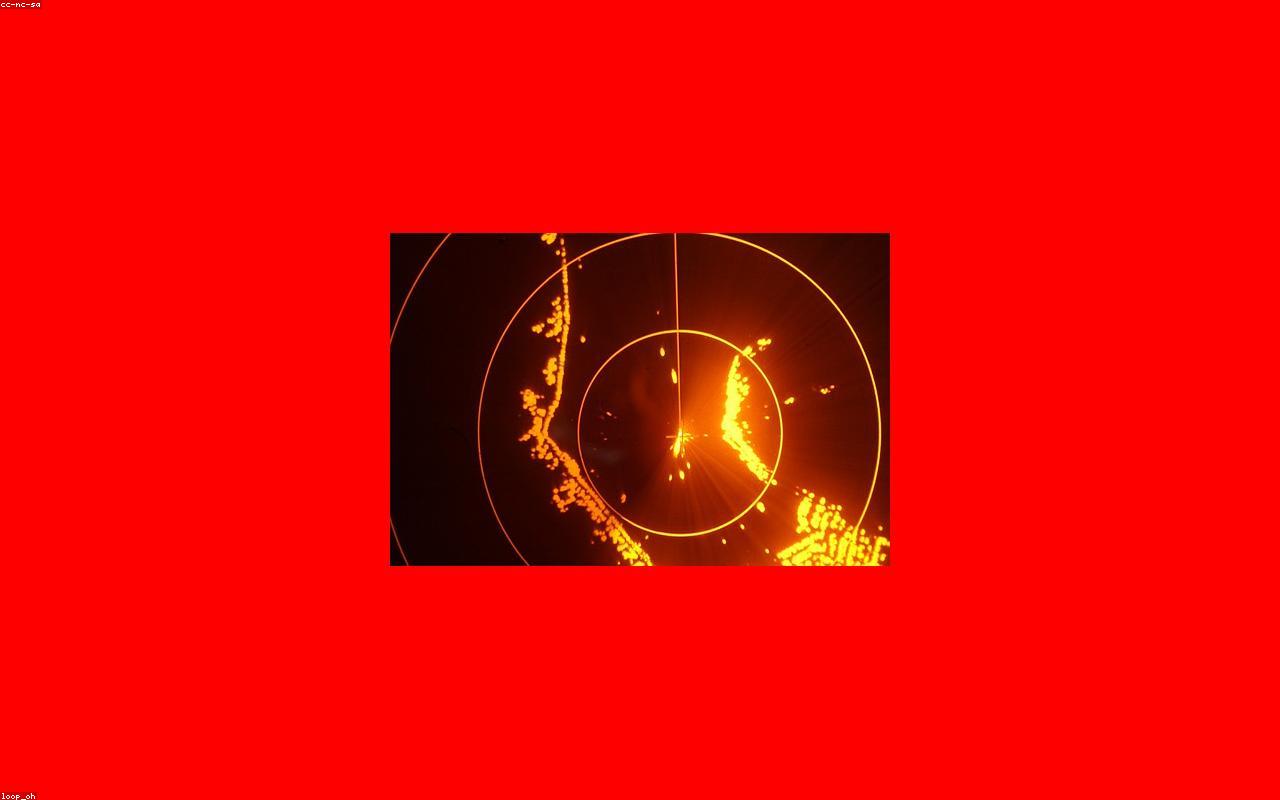
On the evening of 27 April 2026, a meteorologist on duty at the National Weather Service office in Sterling, Virginia, watched a peculiar bloom appear on her Doppler radar screen. It started at sundown over the Chesapeake Bay and within forty minutes had expanded to cover most of the Delmarva Peninsula.
It was not weather. There was no precipitation that night, no convective activity, no humidity gradient sufficient to produce returns of that intensity. What the radar was seeing was birds. Several hundred million of them, lifting off into the night for the next leg of spring migration.
This kind of detection is now routine. It was, until quite recently, not.
The use of weather radar to detect migrating birds dates to the late 1940s, when British operators at coastal RAF stations began noticing unexplained echoes that moved at speeds too slow for aircraft. They called them "angels." By the early 1960s, ornithologists had identified the source.
But it was not until the 1992 deployment of the NEXRAD network, with 159 high-resolution Doppler radars covering the contiguous United States, Alaska, Hawaii, and several Pacific and Caribbean territories, that systematic radar ornithology became possible at continental scale.
Andrew Farnsworth, a researcher at the Cornell Lab of Ornithology, was among the first to recognize the implications. By the early 2000s, the NEXRAD archive contained more than a decade of every night of every migration season across the country, freely available, almost entirely unanalyzed for biological signal.
The technical challenge was substantial. NEXRAD returns include precipitation, insects, atmospheric particles, and biological targets, all overlapping. Separating birds from bats from mayflies required new algorithms. The Cornell group, working with computer scientists at the University of Massachusetts and elsewhere, developed methods to do it.
The result, after fifteen years of work, is BirdCast. Launched as a public-facing forecasting tool in 2018, it now publishes real-time and three-day-forecast maps of nocturnal migration intensity across the continental United States, updated every six minutes during migration seasons.
On a peak night in early May, a viewer can watch a wave of migration sweep north across the country in near real time. The visualization is so vivid that it has become a minor cultural phenomenon, shared on social media by people who do not otherwise think about birds.
What BirdCast also enables is something more practical: targeted conservation. The Lights Out campaigns now active in more than forty American cities use BirdCast forecasts to trigger requests for building managers to dim non-essential lighting on nights of heavy migration. The reductions in window-strike mortality are measurable.
Pell Murphy, who edits Roost's Citizen Science section, has been logging Lights Out compliance data in Charlotte, North Carolina, for three seasons. He notes that the campaign works best in cities where a single high-profile building, often a downtown bank tower, takes the lead. Compliance among smaller buildings then follows.
The radar data itself has produced findings that earlier generations of ornithologists could only have guessed at. The total annual biomass of migrating birds in the lower 48 states has been estimated, on the basis of NEXRAD reflectivity, at roughly 4 billion birds in spring and 4.7 billion in fall, the autumn figure being larger because it includes the year's hatched young.
Those figures are large. They are also, when broken down by decade, declining. A 2019 analysis published in Science by Ken Rosenberg and colleagues used NEXRAD data alongside long-term ground counts to estimate a net loss of roughly 2.9 billion individual birds from North America since 1970. The number, alarming on its face, has held up under subsequent reanalysis.
Migration timing has also shifted. Birds are arriving on their breeding grounds, on average, slightly earlier than they did in the 1990s, with the shift more pronounced in shorter-distance migrants than in long-distance ones. The mismatch this creates, between arrival and the peak abundance of food, is now a major focus of phenological research.
What radar cannot easily do is identify species. A NEXRAD return tells the analyst that a great deal of biological mass is moving north at 18 metres per second, 700 metres above the ground, on a heading of 015 degrees. It does not say whether the mass is mostly thrushes, mostly warblers, or mostly something else.
For species identification, researchers turn to other tools: acoustic monitoring of nocturnal flight calls, banding-station catches at known stopover sites, and increasingly, machine-learning classifiers that combine multiple data streams. Cornell's Macaulay Library now holds tens of thousands of flight-call recordings, labelled to species, used to train these classifiers.
On the radar screen, none of this is visible. The bloom appears, expands, drifts on the upper-level winds, and dissipates with the morning. By 8 a.m. on 28 April, the Sterling radar was clean again. Most of the birds had set down somewhere in Pennsylvania or New York to feed for a day before continuing.
The meteorologist who watched the original bloom is not a birder. She has, she said in a brief interview, learned to recognize the signature without thinking about it. On heavy nights she sometimes opens BirdCast on a second monitor and watches the continent breathe.
Her shift ended at 6 a.m. By then the radar was already showing the early returns of dawn descent, the birds dropping out of the sky to find cover before full daylight. Somewhere in a woodlot in southern Maryland, a Cape May warbler was settling into the upper canopy of an oak, four hundred kilometres further north than it had been twelve hours earlier.
The radar had recorded the journey. The bird, if it survived the next several weeks of cold fronts and glass towers, would not remember it as anything but the way home.