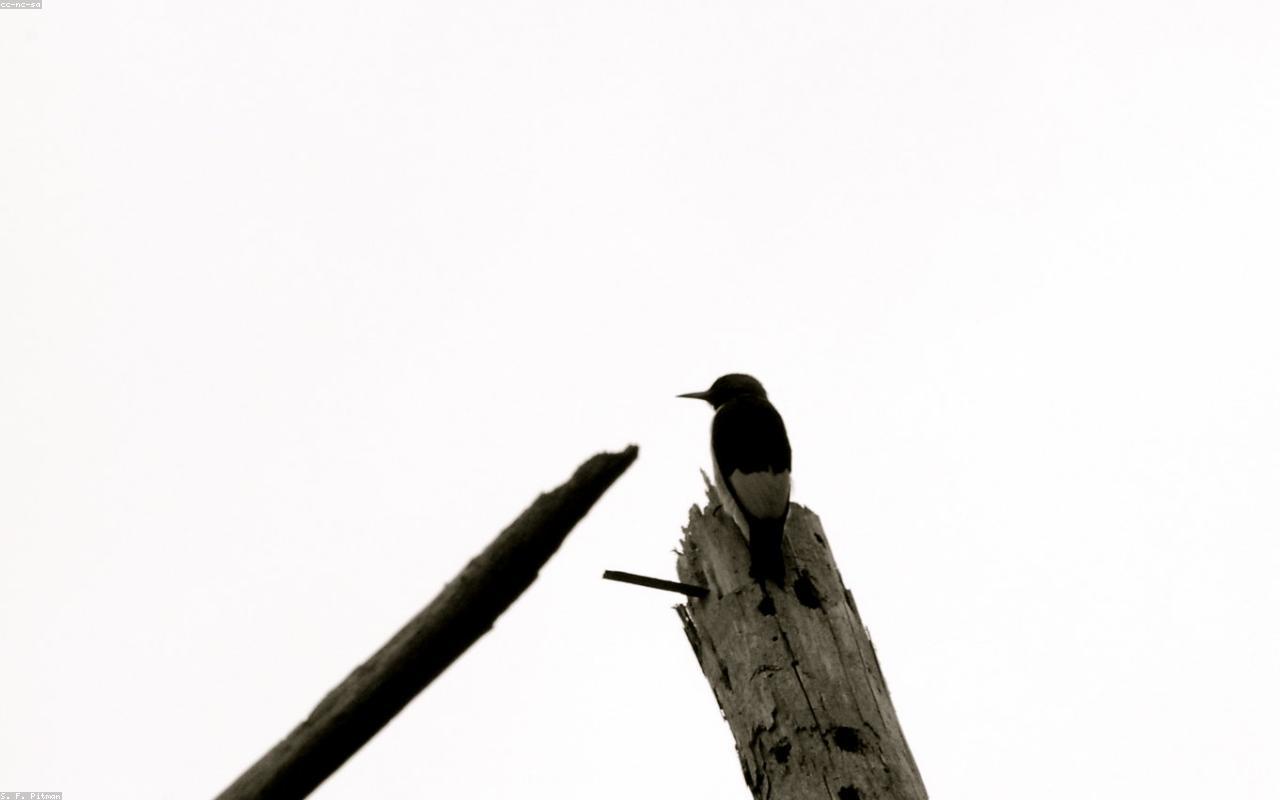
At 8:46 p.m. on May 30, on a flat-roofed parking garage on Broadway in Saskatoon, Saskatchewan, a common nighthawk hunted moths against the sodium-vapor glow from the next block. The roof had hosted nighthawk nests since at least 1979, according to records kept by a retired University of Saskatchewan biologist. The next building renovation, scheduled for 2027, will replace the gravel surface with a green roof.
The common nighthawk (Chordeiles minor) belongs to the same family — Caprimulgidae — as the whip-poor-will discussed elsewhere in this issue. It is, however, a different kind of bird in a different kind of trouble.
Where whip-poor-wills are deep-woods birds tied to dark forest floor, common nighthawks are aerial generalists that have adapted opportunistically to human landscapes. They hunt in open airspace, often quite high — typical foraging altitudes range from 20 to 200 metres above ground. They were never numerous in primary forest but flourished in the gaps that agriculture and urban development created.
Throughout the twentieth century, the species made a particular and unusual accommodation: it began nesting on the flat, gravel-surfaced roofs of urban buildings.
The gravel mimicked, well enough, the open sandy or rocky barrens where nighthawks had historically laid their eggs directly on the ground. Roofs were elevated, generally undisturbed, and warm at night. By the 1950s, urban roof-nesting accounted for a significant fraction of nighthawk reproduction across North America.
It is now collapsing.
Two forces are responsible. The first is the gradual replacement of gravel roofs with rubber membrane, white reflective surfaces, and increasingly with green roofs. The new roof surfaces do not provide nesting substrate. Membrane roofs in particular get too hot in summer sun for incubation, and lack the visual camouflage that allows nighthawk eggs to survive predation.
The second is the same aerial-insect collapse that is starving the whip-poor-will in the southern Appalachians. Common nighthawks eat winged ants, beetles, moths, and other large flying insects. Long-term insect biomass studies — including a controversial but persuasive 2017 paper from Germany showing a 76 percent decline in flying insect biomass over twenty-seven years in protected areas — have established that the airspace nighthawks hunt in is materially emptier than it was a generation ago.
Common nighthawk populations in Canada have declined an estimated 49 percent since 1970, according to Canadian Wildlife Service data. The bird is listed as Threatened under Canada's Species at Risk Act. In the United States, regional declines are similar, though listing has not advanced.
Saskatoon, in particular, has been the focus of one of the longer-running urban nighthawk studies on the continent. Started by Mark Brigham at the University of Regina in the late 1990s, and continued by his students and collaborators since, the project has tracked roof-nesting populations across the prairie cities of Saskatoon, Regina, and Edmonton.
The most recent published data, from the 2022 breeding season, recorded 17 active nest sites across Saskatoon's surveyed roof area, down from 41 in 2002. Most of the lost sites correspond to documented roof replacements over the same period.
Elaine Vavrek, a master's student currently completing fieldwork at the University of Saskatchewan, took Roost to three Saskatoon rooftops in the last week of May 2026. The Broadway parking garage, the roof of an older grain elevator near the rail yards, and a flat-roofed school in the Riversdale neighborhood. All three had active nighthawk activity. The school had two eggs visible from a service ladder on May 31.
Vavrek's research, with the cooperation of the Saskatoon school division, is testing whether installing small gravel-pad inserts on otherwise membrane roofs can preserve nesting opportunity. The pilot involves three schools and one municipal building, with installation completed in April 2025. The 2026 breeding season is the first full test.
The early data, Vavrek said, are mixed. One pad is being used. Two are not, but the surrounding roofs were already vacant before the pads were installed, suggesting the issue may be regional population decline rather than substrate availability per se. The remaining season will help disambiguate.
What is striking, sitting on a Saskatoon rooftop at dusk, is the bird's flight. The wing pattern is unmistakable — long, pointed wings with a white bar across the primaries that flashes as the bird turns. The flight is loose, almost erratic, as the nighthawk responds to insects detected at the edge of vision.
And the call. The common nighthawk's peent is a single nasal note delivered in flight, audible across most of a downtown block on a calm evening. It is the soundtrack of midwestern and prairie summer.
On the Broadway garage roof on May 30, the call was audible at perhaps 9:02 p.m., from one of two birds working the airspace above the garage and the adjacent intersection. The male's territorial boom — a wing-noise dive display in which the bird drops sharply and pulls up, the air through the wings producing a hollow drumming sound — was performed at 9:18 p.m. against the side of the office tower across the street.
It was, viewed in a particular light, the most natural sound in the city.
It will not be the sound of that intersection after 2027, when the gravel comes off.
The city has plans to retain habitat. The municipal heritage and sustainability office is in conversation with Vavrek's group about installing nesting pads on the new green roof, with funding from a small biodiversity grant. Whether the nighthawks will accept the pads is, as with the schools pilot, an empirical question.
What will not be empirical is the simple loss of incumbency. The birds that have nested on that roof for nearly fifty years — the lineage, not the individual birds — will be disrupted. Common nighthawks do show some natal philopatry, returning to nest near where they hatched. A discontinuity in roof availability tends to be a discontinuity in local population.
The bird at 8:46 p.m. on May 30 hunted for another forty minutes, peenting intermittently, and then flew south toward the river. It was joined briefly by a second bird, then a third. By 9:43 p.m., as the streetlights took the rest of the daylight, the airspace above the garage was empty.