The North Lookout at Hawk Mountain Sanctuary sits at 1,521 feet on the Kittatinny Ridge in Berks County, Pennsylvania, a forty-minute drive northwest of Reading. It is, by the simplest measure, a fan of broken sandstone above the canopy.
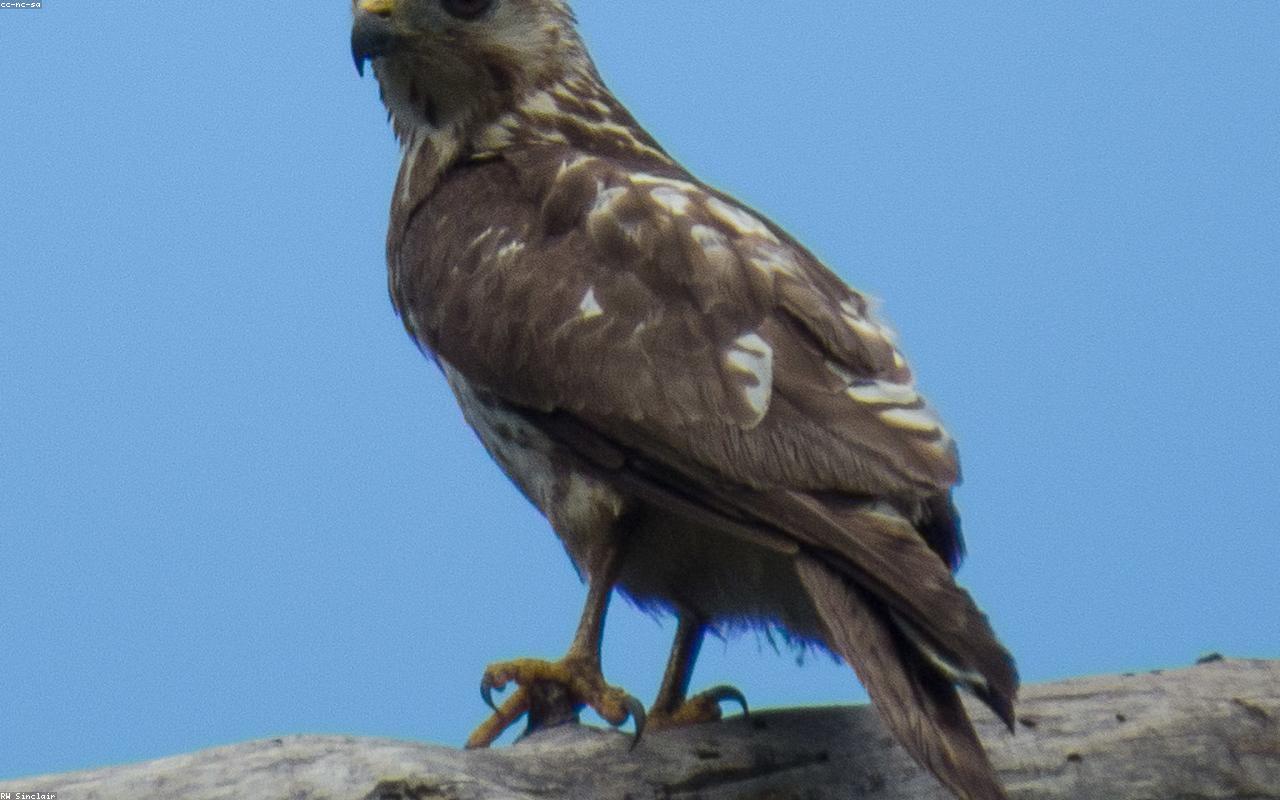
On the third Wednesday in September, a north wind began to blow at 11:42 a.m. Within forty minutes the first kettles of broad-winged hawks were over the ridge, drifting south on rising thermals, several thousand feet up.
Laurie Goodrich, the sanctuary's senior monitoring biologist, was at the North Lookout in her usual seat against the eastern rock pile, with a notebook on her knee and a counting clicker in her left hand.
The official counter that afternoon was a volunteer named David Barber, who has called the broad-wing migration here since 1991. He sat on the central rock, binoculars at the ready, his voice low and steady.
Forty-two. Eighteen kettling at twelve o'clock. Ten kicking out south. Four more, low, with a sharp-shinned in the mix.
The broad-winged hawk migration through Hawk Mountain peaks in mid-to-late September. The species winters in Central and South America and funnels south along the Appalachian ridges in soaring flocks. A good September day at the North Lookout can record between two and ten thousand birds.
Hawk Mountain Sanctuary was founded in 1934 by Rosalie Edge, who purchased 1,398 acres of ridge to stop the recreational shooting of raptors at the gap. The site became the first refuge of its kind in the world. Its official count series, begun in 1934, is now the longest continuous raptor count on Earth.
By 1:30 p.m. on this Wednesday the count had reached 642. By 2:00 it was 1,118. The thermals were stacking up over the southern face of the ridge in a way that drew the hawks down the line at a predictable pace.
Visitors arrived in a steady trickle. A pair of retirees from Allentown, a family with two daughters from Lancaster, a young man on his lunch break from Hamburg who carried a sandwich and a single pair of compact binoculars.
A turkey vulture worked the near side of the ridge at eye level, and three children stood on the rocks watching it cross. The bird did not flap once in the eighty seconds it took to traverse the lookout.
Barber's count voice carried only as far as the rock seats. He did not announce kettles to the visiting public. The numbers were for the data sheet, the data sheet for the long record.
The long record is the point of Hawk Mountain. The 1934-to-present count series has documented the DDT-era collapse and recovery of peregrine and bald eagle populations, the bald eagle's mid-century rebound, the long decline of American kestrel numbers, and the recent stability of broad-winged hawk passage volumes.
Maurice Broun, the sanctuary's first warden, established the counting method in 1934. The protocol has barely changed: one or two trained counters at the lookout, hourly tallies of all raptor species visible from the rocks, conservative species identification, and rigorous documentation of weather and visibility conditions.
Inara Khan, visiting from Mumbai on a research trip, sat at the western edge of the lookout with a notebook of her own. She had asked Goodrich earlier whether the data were openly available. They were, Goodrich said. The full series is downloadable from the sanctuary's site.
At 2:18 a kettle of roughly four hundred broad-wings appeared over the south slope. The birds were high, almost at the limit of unaided sight, but Barber's binoculars resolved them within a few seconds.
He called the number and the time and the location. Goodrich noted it on the sheet. The kettle drifted south, broke apart, and re-formed as a long line of singles and pairs heading down the ridge toward Bake Oven Knob, the next major lookout, eighteen miles to the south.
By 3:30 the count stood at 1,294. The wind had backed slightly, the thermals had weakened, and the passage rate had slowed. Barber held his position. Goodrich began to pack her notebook.
She mentioned, by way of comment, that the day's number was respectable but not historic. The record September day at Hawk Mountain stands at 21,448 birds, set in September 1978. Most modern peak days come in between three and seven thousand.
What modern counts have lost in single-day peaks they have gained in calibration. The protocol is tighter now. The observer training is more formal. The data are entered into the Hawk Migration Association of North America's database within seventy-two hours.
By 4:30 the count had risen another two hundred birds and Barber, after thirty-five years of broad-wing afternoons at this lookout, walked slowly down the trail toward the parking lot with the count sheet folded in his jacket pocket.
The lookout, at 5:00, held only two visitors. The wind had died. The sky was a clear pale blue with a single high contrail. A red-tailed hawk drifted up from the south, circled the rocks once, and continued on, unrecorded, after the day's official count had closed.