The Iain Nicolson Audubon Center at Rowe Sanctuary stands on a low bank of the central Platte River, three miles south of Gibbon, in Buffalo County, Nebraska. It is a long, low building with a viewing deck and two heated blinds on the river itself.
On the eighteenth of March, the late-afternoon temperature was forty-one degrees Fahrenheit. The wind was northwest, eighteen knots, and smelled of wet snow that had not yet fallen. The river ran shallow and braided, the channels separated by long sand bars and willow islands.
Bill Taddicken, the sanctuary's director, briefed the evening's twenty-four blind visitors at 5:30 in the visitor center. The walk to the blind, he said, would take ten minutes. There would be no talking after the door to the blind closed. No flash photography. No movement to the back wall after the cranes had landed.
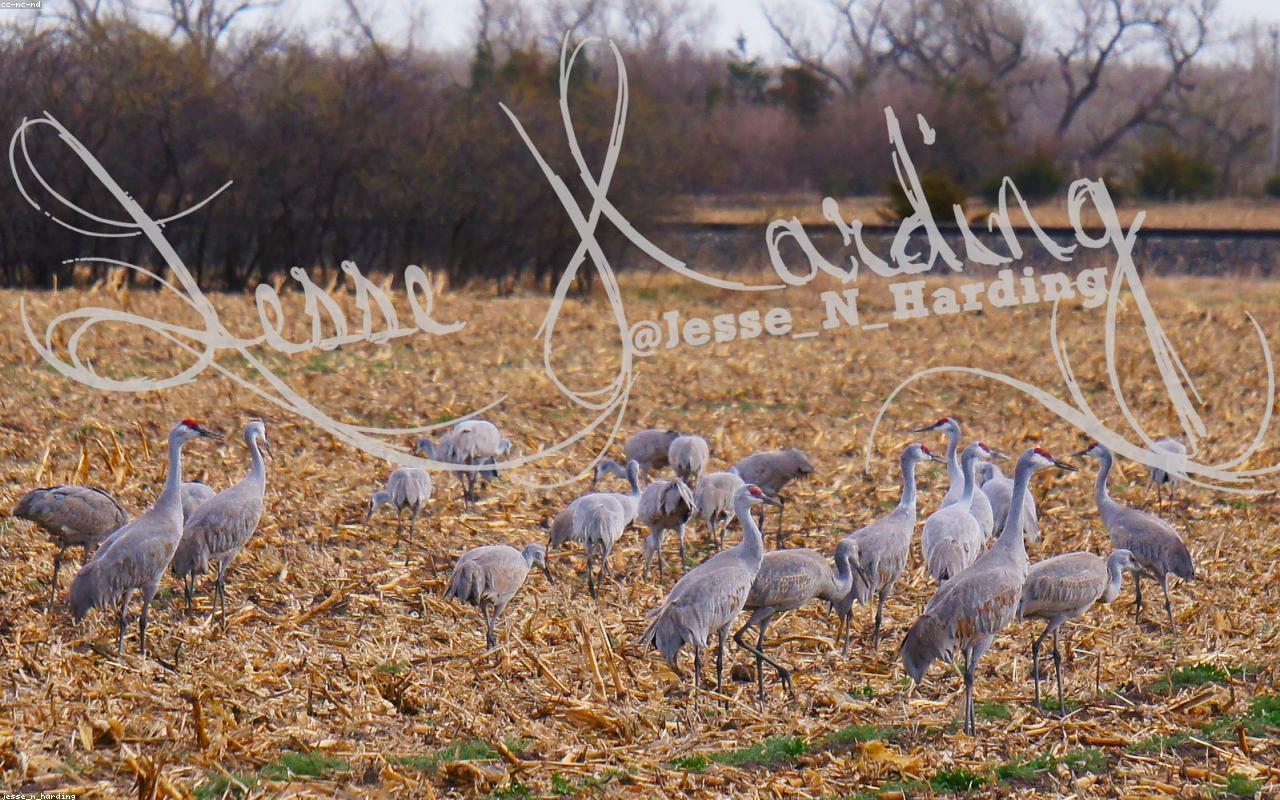
The sandhill crane spring migration through the central Platte is one of the largest staging events of any bird species on Earth. Roughly 600,000 to 800,000 birds — perhaps eighty percent of the mid-continental population — concentrate along an eighty-mile reach of the river between mid-February and mid-April.
The cranes use the Platte's sand bars as nighttime roosts, safe from terrestrial predators. By day they feed in the surrounding cornfields on waste grain, building fat reserves for the remainder of their northward journey to nesting grounds in northern Canada, Alaska, and eastern Siberia.
By 6:00 the visitors were at the blind and seated. The blind is a wooden box on stilts with horizontal viewing slots and a side door that latches from the inside. The river was thirty yards away.
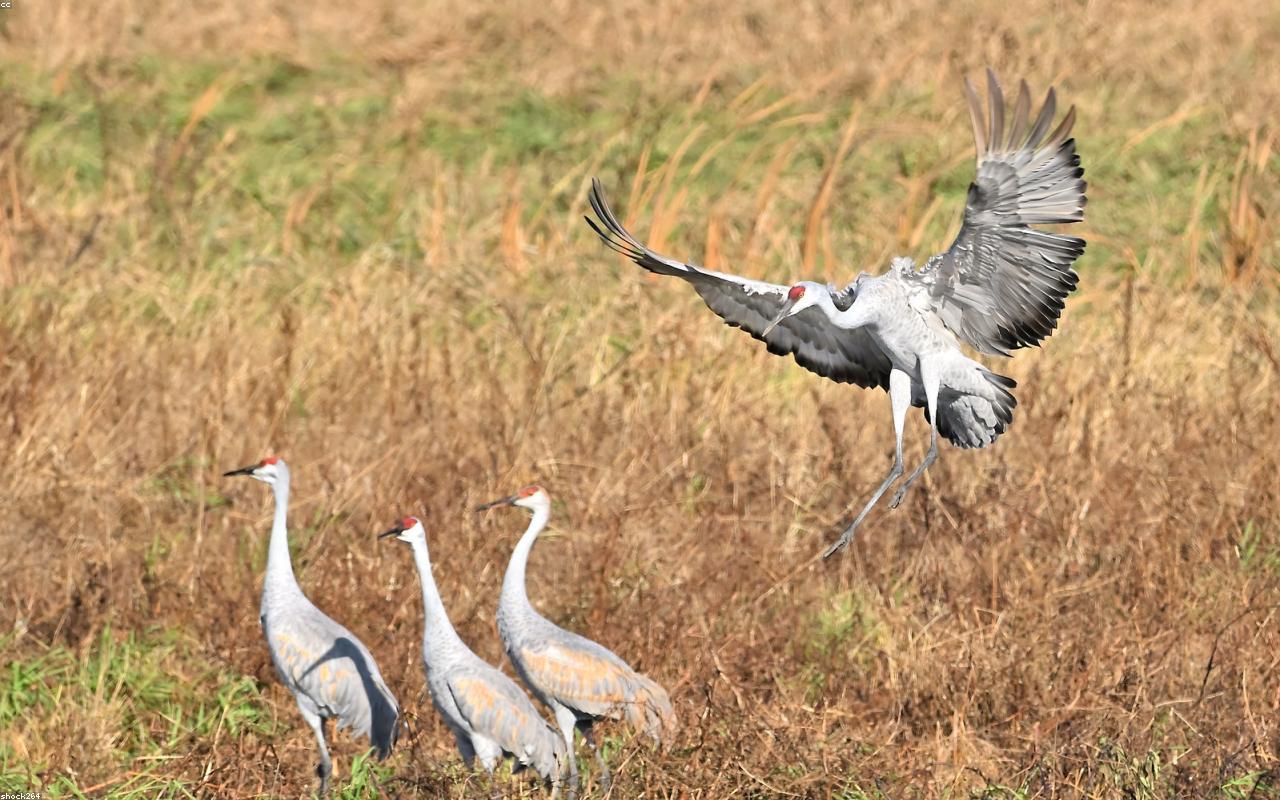
At 6:08 the first cranes appeared, low and from the southwest, two birds in line. They circled the river twice and dropped onto a sandbar four hundred yards downstream. Their landing was awkward, all leg and outstretched wing.
By 6:25 the air over the river was filled with cranes. Skeins of forty, fifty, eighty birds wheeled in from every direction, calling steadily. The call of the sandhill crane is a rolling, trumpeting bugle that carries half a mile in still air.
Within the blind, no one spoke. The viewers stood at the slots, binoculars up, faces close to the wood. Several children sat on the floor with their parents' arms around them.
By 6:42 the count on the river within the blind's field of view had reached, by Taddicken's later tally, approximately 78,000 birds. The sand bars were no longer visible. The cranes covered them entirely, three and four birds deep.
The sound is what the literature does not adequately prepare a visitor for. Eighty thousand cranes vocalizing within four hundred yards is not a single noise but a continuous, rolling, multi-layered sonic field. It does not let up.
Paul Johnsgard, the University of Nebraska ornithologist who studied the Platte cranes for nearly five decades before his death in 2021, called the sound the oldest continuous music in North America. The fossil record places sandhill cranes on this continent at over two and a half million years.
Jasper Wynn, who had flown from Wellington for a six-week recording trip across the central United States, was at the blind's back wall with a stereo microphone array on a fixed boom. His recorder ran on battery power and a wind muff. He took notes on the levels every two minutes.
By 7:14 the sky had darkened sufficiently that individual cranes were difficult to see. The flight calls overhead continued. The river held perhaps 120,000 birds by Taddicken's expanded estimate, far beyond what the blind's field of view could resolve.
Inara Khan stood at the slot beside Wynn and made notes in a small black book. She wrote later that the experience had restructured her understanding of what a bird is, or could be, at sufficient scale.
By 7:40 the river was full. The cranes had ceased arriving in large numbers. The remaining few birds were trios and singles, late returns from outlying cornfields, dropping in on long final glides.
The wind picked up and the temperature began to fall. Taddicken signaled with a flashlight that the group could begin to leave. The walk back to the visitor center was made in silence, single file, on the gravel path.
The Platte staging event is, by ecological convention, the most important single-species staging event of any North American bird. It is also one of the most concentrated. The eighty-mile reach of the central Platte represents perhaps three percent of the cranes' historic spring staging habitat.
Channel narrowing, vegetation encroachment, and water diversion have reduced the suitable roosting habitat substantially since the early twentieth century. The Crane Trust, Audubon Nebraska, and the Platte River Recovery Implementation Program manage active restoration along the corridor.
Back in the visitor center at 8:15, the group dispersed slowly. A man from Omaha said quietly to his wife that he had grown up forty miles north and had never come. A woman from London asked Taddicken, very simply, whether the experience could be lost.
Taddicken said that the population was, for now, stable. The habitat, with active management, was holding. The river continued to be the bottleneck. The birds, for as long as the river held its shape, would return.
By 9:30 the parking lot held three cars. The cranes on the river were silent. The wind had dropped. The first thin flakes of the predicted snow were beginning to fall, melting on the gravel before they could accumulate.