When Renée Asher bought a 1957 ranch house on a corner lot in West Asheville, North Carolina in October 2019, the yard came with 19,800 square feet of fescue lawn, four mature oaks, and a foundation planting of compacted boxwood. The previous owner had maintained the lawn with a contracted service that visited weekly from March through November.
Asher is a landscape architect who works primarily on commercial sites. The decision to convert her own yard was, by her account, more personal than professional. She had read Doug Tallamy's Bringing Nature Home in 2018 and had been quietly aggrieved by her contribution to suburban monoculture ever since.
She began the conversion in spring 2020, working roughly one weekend a month for the next six years. The total budget, tracked in a spreadsheet she will show anyone who asks, came to $4,260 across the period — substantially less than she would have spent on lawn maintenance during the same span.
The first cut was the front lawn. In April 2020, she sheet-mulched 4,800 square feet with overlapping cardboard from her moving boxes, topped with three inches of arborist wood chips obtained free from a local tree-removal company. She planted nothing for the first year. She let the lawn die under the mulch.
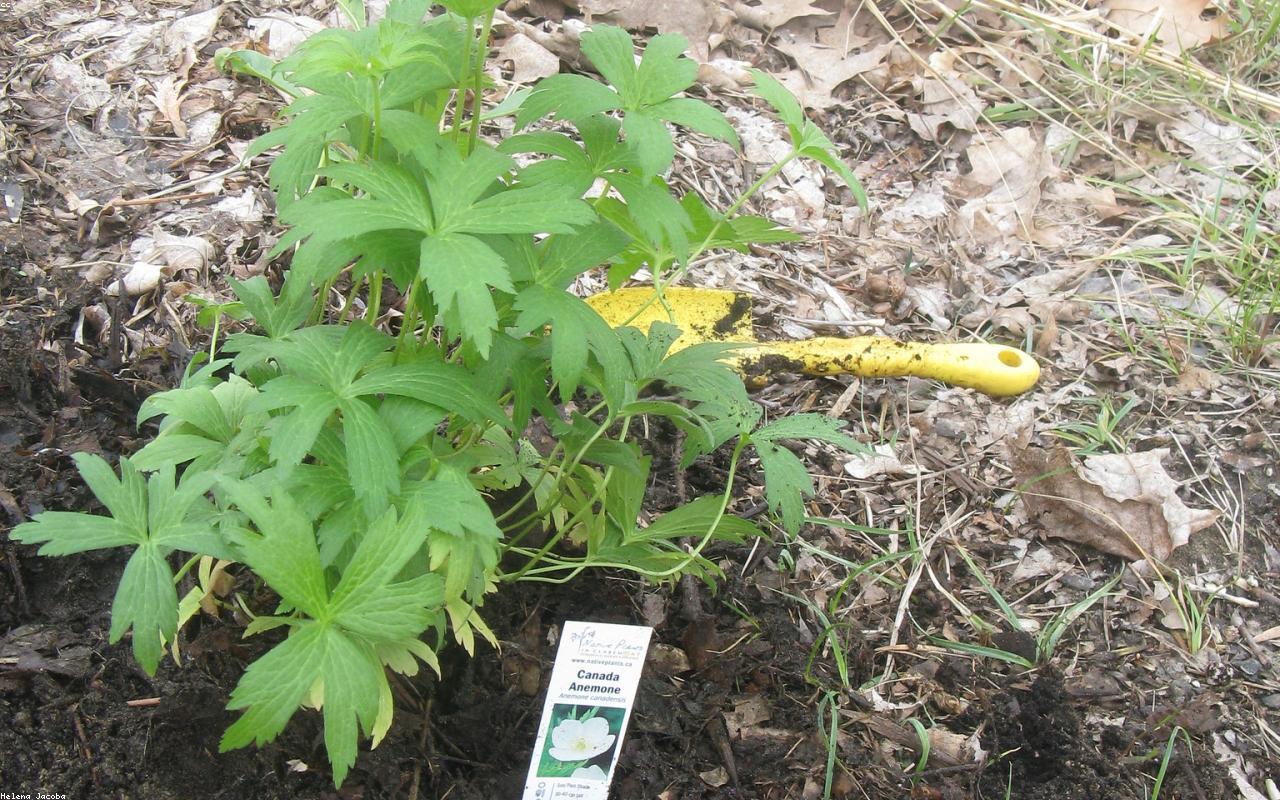
In April 2021, the cardboard had broken down sufficiently to plant through. She installed a mix of seven native species selected from the North Carolina Native Plant Society's recommended list for the southern Appalachian piedmont. The list, in alphabetical order, included Asclepias tuberosa (butterfly weed), Coreopsis verticillata (threadleaf coreopsis), Echinacea purpurea (purple coneflower), Monarda fistulosa (wild bergamot), Pycnanthemum muticum (clustered mountain mint), Rudbeckia hirta (black-eyed Susan), and Solidago rugosa (rough goldenrod).
She bought the plants as plugs from a small native-plant nursery in Black Mountain. The total cost for the first installation was $312. Most of the plugs were under two inches across at planting.
The first summer was unremarkable. Most of the plants established quietly. A few died. The mountain mint, which is famously aggressive, began to spread by stolons before the end of August.
The second summer was different. By July 2022, the front yard was supporting visible insect activity at densities Asher had not seen at the property before. She began informal counts — a five-minute scan from her front porch with a small notebook — and was logging twenty to thirty bee, wasp, and butterfly species per session.
This is the part of the native-planting argument that Tallamy's work made explicit. Birds, particularly during the breeding season, depend on insects — caterpillars especially — to feed their nestlings. Native plants support native insect populations at orders of magnitude higher than non-native ornamentals do. A native oak supports more than 500 species of Lepidoptera larvae in eastern North America. A non-native ginkgo supports five.
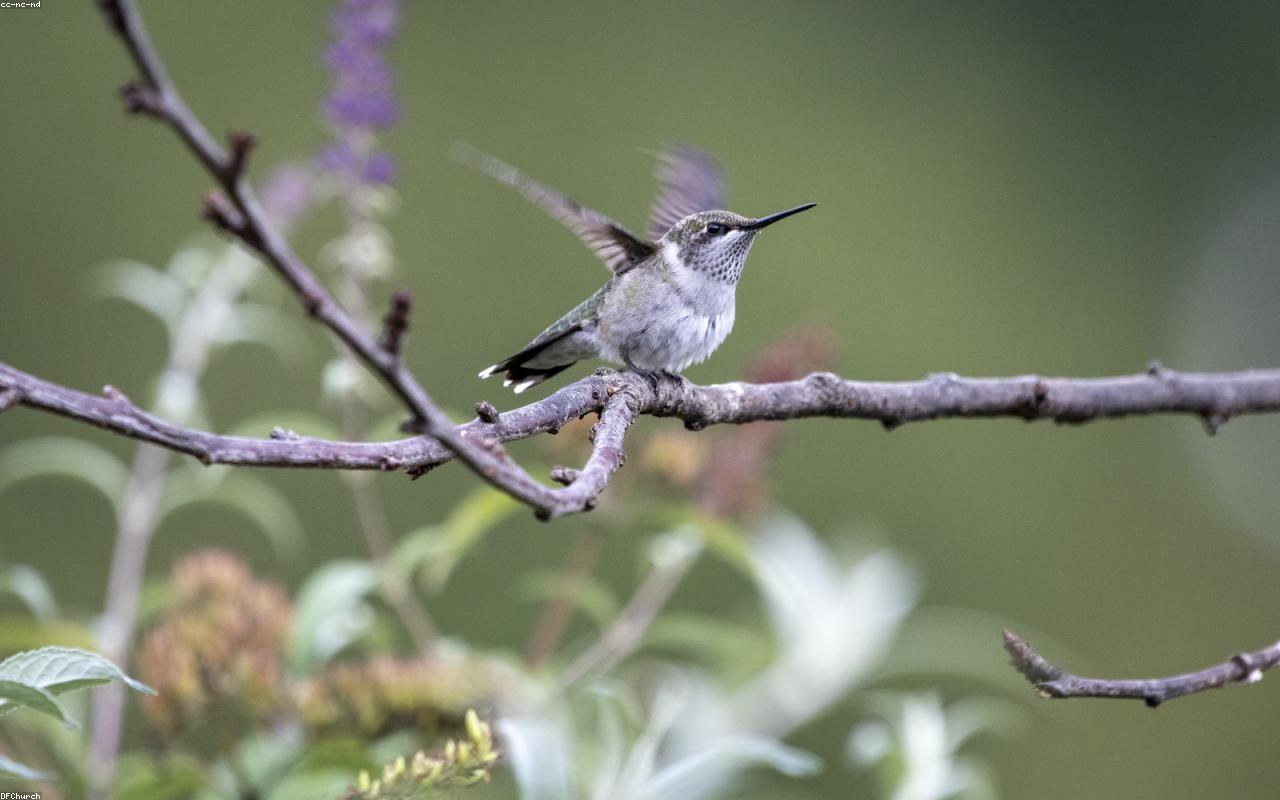
The bird population followed the insects, on a lag of roughly one nesting season. By spring 2023, Asher was hearing carolina wrens nesting in the dense centre of her bergamot bed, watching chipping sparrows pull caterpillars from the goldenrod, and recording her first-ever yellow-billed cuckoo at the property — a species that specializes in eating tent caterpillars and is in steep decline across its eastern range.
Her cumulative yard bird list, which stood at 31 species when she moved in, reached 64 by the end of 2023. By the end of 2025, it stood at 87.
The conversion continued in phases. The back lawn went under cardboard in 2022. Asher kept a small section — perhaps 800 square feet — as a clover-and-fescue mix for the dog and for sitting. The rest she converted to a mix of native shrubs and small trees: serviceberry, eastern redbud, american beautyberry, spicebush, and three winterberry hollies grouped for cross-pollination.
The shrub layer is, in Tallamy's analysis and in the practical experience of most habitat-gardeners, the most underused tier of the suburban yard. A 200-square-foot patch of spicebush hosts spicebush swallowtail caterpillars, which feed nestling birds in May and June. The berries feed migrating thrushes and waxwings in October. The dense low cover gives sparrows a winter roost. None of this work is done by a 200-square-foot patch of lawn.
The foundation planting went last. Asher removed the compacted boxwood in autumn 2024 and replaced it with a mix of inkberry holly, native azaleas, and a single fothergilla. The space is now functionally a small understory shrub border, transitioning between the house and the meadow plantings.
The water bill is worth a separate mention. Asher's monthly summer water consumption — measured against her 2019 baseline of the all-lawn property — has dropped by 62 percent. The native plantings, once established, require essentially no supplemental watering through the southern Appalachian summer. The lawn she replaced had required roughly an inch of irrigation per week to stay green.
She has also stopped using the lawn-care contractor. The remaining 800 square feet of lawn she mows herself with a corded electric mower in about twenty minutes every other week. The annual savings, compared with her 2019 expenditure, is about $1,400.
There are honest limitations to share. The yard does not look like a magazine yard. The mountain mint, by year five, had to be aggressively contained to keep it from overtaking neighbouring plantings. The black-eyed Susan reseeded into the small remaining lawn. The redbud Asher planted in 2021 lost a major leader to a wind storm in 2024 and required corrective pruning that left it less symmetrical than she would have preferred.
The neighbours' reactions have varied. The retired couple to the east is, by Asher's account, charmed. The young family to the west is polite. A third household, across the side street, complained to the city in summer 2023 about what they called 'weed lot conditions.' The complaint was dismissed after a code-enforcement inspector visited and confirmed that the planting was a deliberate landscape, not neglect.
Asher has now begun consulting informally for neighbours who want to do something similar but at smaller scale. Her standard recommendation is to start with 400 square feet — a single bed against a fence or along a walk — and plant five to seven native species in groups of three to five plants each. The cost, with plugs from a local nursery, is typically under $200.
The slow conversion of a single suburban yard does not solve any continental-scale conservation problem. The math, multiplied across the roughly forty million acres of lawn in the United States, would be more interesting if more yards were converted. Asher is realistic about the limits of her contribution. She thinks of the yard as a single working example, not as a movement.
She still keeps the spreadsheet. The species list is at 87 and the water bill is in May, and the yellow-billed cuckoo, by the time you read this, will likely have returned for its fourth consecutive breeding season in the back-corner spicebush.