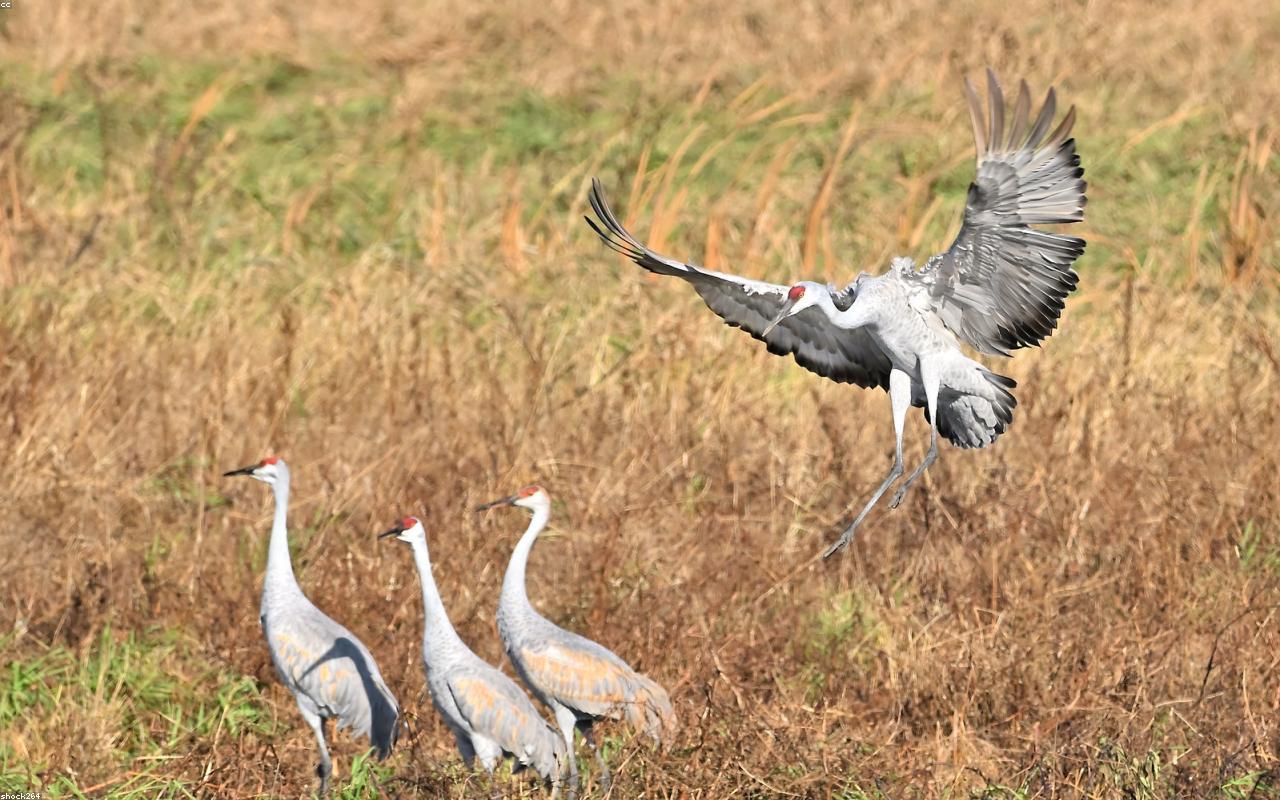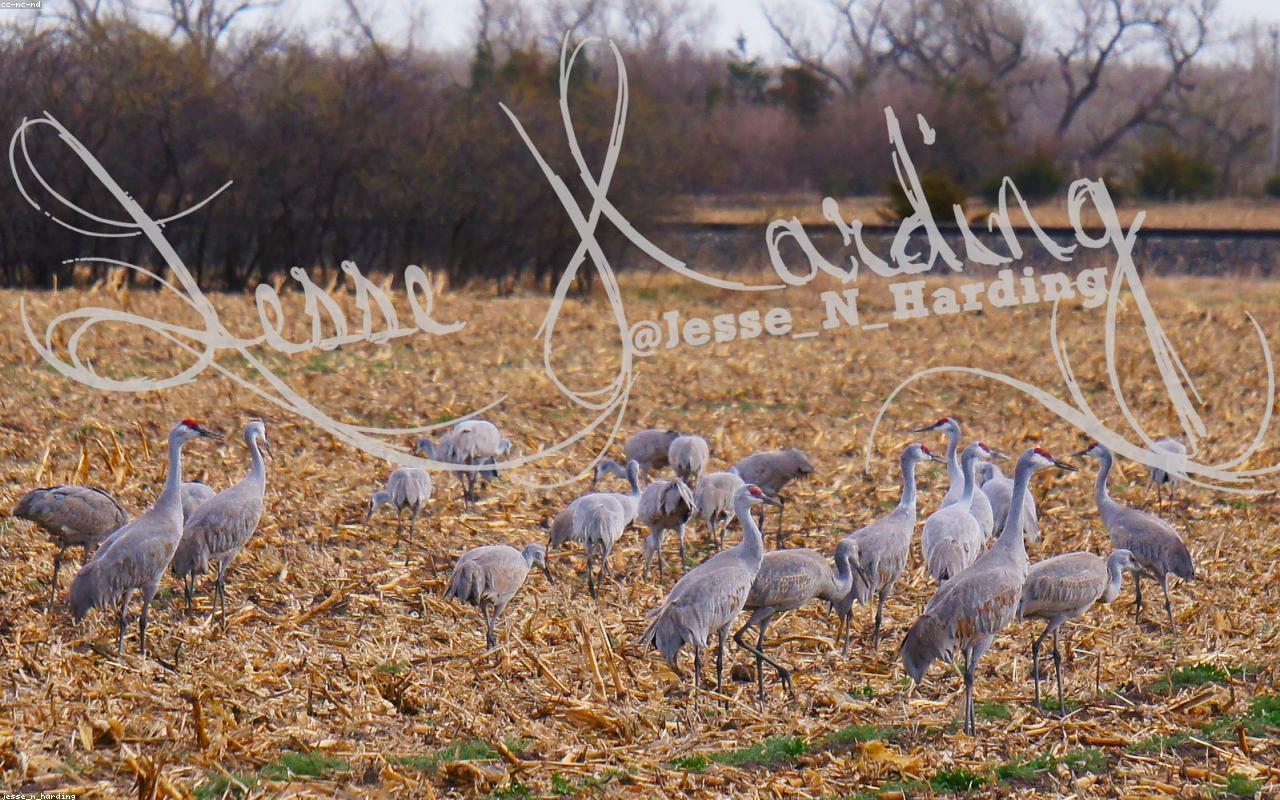
From the Iain Nicolson Audubon Center blind at Rowe Sanctuary, at 5:48 a.m. on March 22, the Platte River was a continuous line of birds for roughly a kilometre in either direction. The sound was not a call. It was a weather event.
Roughly 600,000 sandhill cranes (Antigone canadensis) stage on a 130-kilometre stretch of the central Platte each spring, a number that represents about eighty percent of the global population of the species. They arrive from wintering grounds in Texas, New Mexico, and northern Mexico. They depart for breeding territories that stretch from the Dakotas to Siberia.
They stop here because of the river's geometry, the corn waste in the surrounding fields, and an accident of refuge management dating to the early 1970s.
The cranes need a particular kind of river: wide, shallow, with low islands and sandbars exposed at night. The sandbars give them roosts with three hundred and sixty degrees of sightlines, protected from coyotes by water on every side. The Platte once provided this geometry along most of its length. Damming, channel narrowing, and tree encroachment have reduced the suitable reach to a fraction of what it was in 1850.
What remains is managed. Crews from the Crane Trust, the Audubon Rowe Sanctuary, and the Nebraska Game and Parks Commission cut cottonwood and willow off the islands every winter, run controlled burns, and use mechanical disking to keep the channel wide. Without that work, the river would close in within a decade.
Brad Mellema, who has been associated with the sanctuary in various roles since the 1990s, put it bluntly during an afternoon walk along the south bank. We are not preserving a wild river. We are running an outdoor crane facility that looks like a wild river.
The honesty matters, because the management is what makes the spectacle possible, and the spectacle is what funds the management.
The cranes arrive in late February. By the second week of March the population has crossed 400,000 birds. The peak, in most years, falls between March 18 and March 28. By April 12 the river is mostly empty again, the birds gone north.
During the staging period each crane gains roughly a pound of body weight. They feed in surrounding cornfields by day on waste grain, supplemented by invertebrates from wet meadows. They court, in long-running pair displays, with leaps and tossed sticks. Older birds, already paired, refresh the bond.
From the blind, the dawn liftoff is the moment most visitors come for. The cranes leave the roost in waves rather than all at once. The first lift, in the half-dark, is a sound before it is a sight: a low rolling bugle that builds for ninety seconds and then breaks into the flight calls of thousands of birds simultaneously airborne.
Stephanie Yarnell, a Crane Trust biologist who has been counting birds from the Alda Bridge since 2019, told Roost that the 2026 spring count peaked at an estimated 642,000 cranes on the night of March 23. The estimate is built from aerial transects, photographic counts, and ground observations cross-referenced over three nights. The methodology has been refined since the 1990s and the year-on-year numbers are now considered reliable to within roughly four percent.
What the count does not capture is the rest of the bird's year.
Sandhill cranes are long-lived — twenty to thirty years in the wild is normal — and slow to reproduce. A pair will fledge one chick in a successful year, often none. Population stability depends on adult survival across the full annual cycle. The threats are distributed: wind-farm collisions in central Nebraska, drought on Texas wintering grounds, wetland loss across the Prairie Pothole region, and the recurrent question of whether managed hunting in some states is calibrated correctly.
Sandhill crane hunting is legal in fifteen US states, though not in Nebraska, where the staging concentration makes regulated take politically untenable. The 2026 federal harvest allocation across the Central Flyway was approximately 24,000 birds. Researchers continue to debate whether the take is sustainable against current population trends.
From the blind, the politics fall away. There is the cold pre-dawn, the river, the breath visible against the binocular eyepiece, and 600,000 birds about to be in the air.
Roost's editor in chief has been visiting the Platte since 2002. She no longer takes photographs from the blind. She writes in a small notebook, two or three lines per session, and reads them back twenty years later.
March 22, 2026: "Lift began 6:11 a.m. Wave-pattern departure, southeast first. Bugling sustained four minutes. Two adults landed back briefly at 6:23, then re-lifted. North wind, light."
The notebook is a kind of ledger the cranes themselves do not need. They have their own. They will return, in a smaller number or a larger one, next March, and the year after, as long as the river runs wide and the cottonwoods are cut and the corn is harvested with enough waste left on the ground.
The dawn departure on March 23 was filmed by three crews and witnessed by an estimated 450 visitors from blinds along a ten-mile stretch of the river. The cranes themselves, indifferent to the cameras, finished their lift by 6:34 a.m. and were over the cornfields a minute later, finding the day's first meal in the rows where last fall's combine missed.