A retired finish carpenter named Cal Wieting keeps a small bench in his garage in Brattleboro, Vermont, where for the past eleven years he has built bluebird nest boxes from white cedar offcuts donated by a local sawmill. He has made, by his count, somewhere over four hundred boxes. He sells them at the Brattleboro farmers market for thirty dollars each and gives away as many as he sells.
His design is identical to the one published by the North American Bluebird Society in 1978 and reissued, with minor refinements, every five years since. He could have invented something different. He has not seen a reason to.
The plan, in its current form, calls for rough-cut white cedar or pine boards approximately three-quarters of an inch thick. The interior floor is four inches by four inches. The interior height from floor to entrance hole is six inches. The entrance hole is exactly one and a half inches in diameter, drilled nine inches above the floor.
These numbers are not arbitrary. The 1.5-inch entrance hole is small enough to exclude European starlings, which require a 1.75-inch opening to enter and which will displace bluebirds if they can. The four-by-four floor accommodates a typical clutch of four to six bluebird eggs without crowding. The six-inch entrance-to-floor distance is far enough that raccoons and house cats cannot reach in and pull out a nestling.
Wieting's variation, if it can be called that, is in the joinery. He uses stainless-steel ring-shank nails rather than screws, on the theory that they hold better in cedar across freeze-thaw cycles. He does not paint his boxes. The cedar weathers to a soft grey within a season and lasts roughly fifteen years in southern Vermont before the roof needs replacing.
The most important feature of the box is not the dimensions but the roof. The standard plan calls for a sloped roof that extends at least two inches beyond the front face, with a kerf cut into the underside to break the capillary path of rain. Without the overhang, water reaches the entrance hole and runs down the interior wall. The nest soaks. The clutch fails.
The second most important feature is ventilation. Three-eighths-inch gaps under the eaves, on both sides, vent the heat that accumulates in a south-facing box during a Vermont July. Without ventilation, nest temperatures in direct afternoon sun can reach the high nineties Fahrenheit, hot enough to kill nestlings in the days before fledging.
Drainage is the third. Four small holes drilled through the floor at the corners, or alternatively the corners themselves notched off at an angle, allow any rain that does enter to drain out rather than pooling under the nest.
The fourth and last non-negotiable feature is the side door. The box must open for monitoring and cleaning. A hinged side wall, swinging down on a single screw, is the standard. The door is held shut by a second screw or a small wire-and-eye catch. The birder needs to be able to look in once a week during the nesting season.
The monitoring is the part most casual box installers skip. The North American Bluebird Society's monitoring protocol, which Wieting hands to every buyer, asks the keeper to check the box weekly from April through August, record the contents, and remove the nest after each successful fledging. A bluebird pair will often raise two and sometimes three broods in a season, but only if the box is cleaned between attempts.
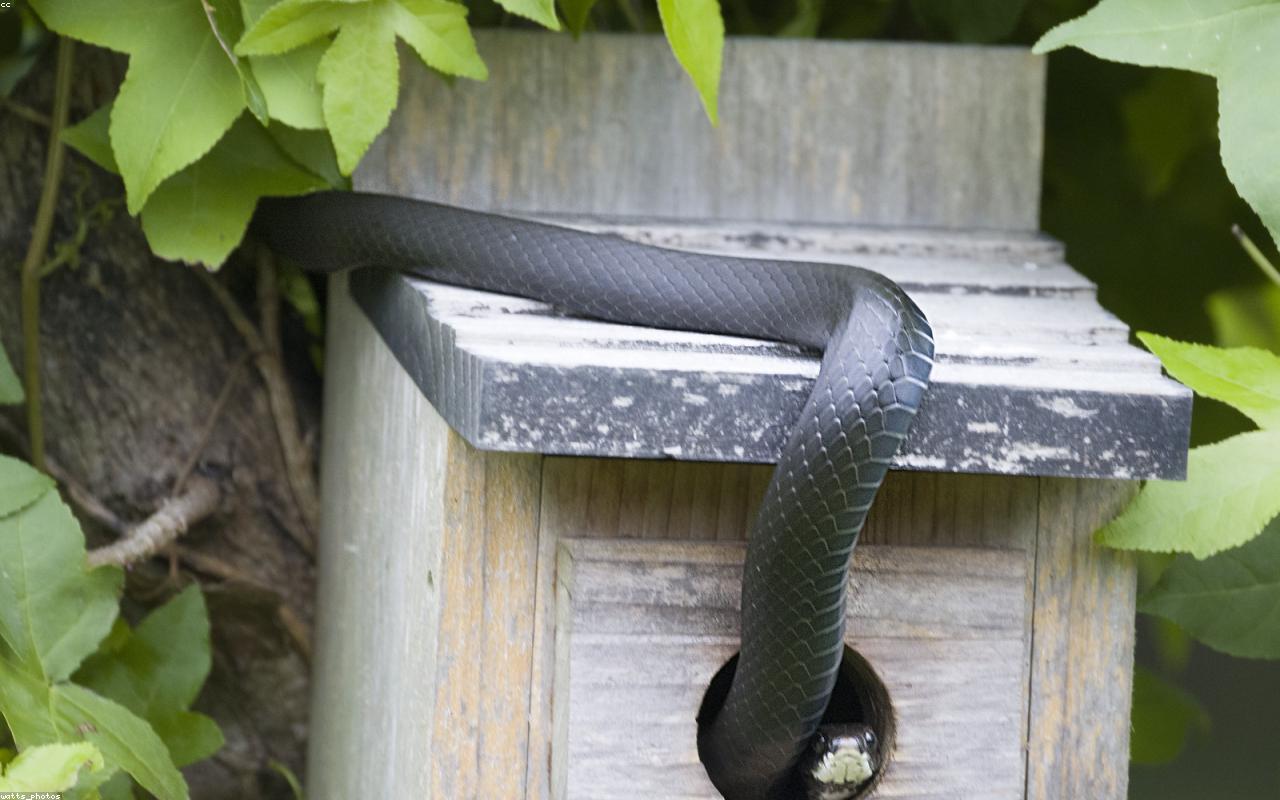
Mounting matters as much as construction. The box should be five to six feet above ground, attached to a smooth metal pole — Wieting uses three-quarter-inch galvanized electrical conduit — with a stovepipe predator baffle below. Wooden posts, trees, and fences are all unsuitable. Raccoons climb them. Snakes climb them. Bluebirds nest in them anyway, and the nests fail.
The pole should be set in an open area — a lawn, a meadow, the edge of a horse pasture — with at least fifty feet of clear ground between the box and the nearest brushy cover. House wrens, which destroy bluebird eggs by puncturing them, hunt out of brushy edges and lose interest in the open. Tree swallows, which are otherwise compatible neighbours, will take the box if it is the only one nearby, but a paired-box installation — two boxes set fifteen to twenty feet apart — usually resolves the competition by allowing one species to nest in each.
Wieting tracks his customers' boxes through a small spreadsheet. Of the 287 boxes he sold or gave away between 2015 and 2024, he has fledging data on 134. Those boxes have produced an estimated 1,890 bluebird fledglings across nine seasons. The remaining boxes either were not monitored or were taken by tree swallows, chickadees, or house wrens.
The species-substitution question is one Wieting addresses directly. Tree swallows are protected native cavity-nesters and welcome in a box. Chickadees and titmice are likewise welcome and use the box without modification. House wrens are native and protected and aggressive, and the only defence is siting. House sparrows are non-native, invasive, and the most serious predator of bluebird nests in the eastern United States. They are not protected, and most state bluebird societies recommend their nests be removed and the box trapped if they become persistent.
Wieting will not sell a box to anyone who lives within a quarter-mile of an active livestock barn or grain operation, because the local house sparrow population in such places will overwhelm any defensive trapping the homeowner can sustain. He recommends those customers put up a different kind of box — for chickadees, or tree swallows — and accept that the yard is not bluebird habitat.
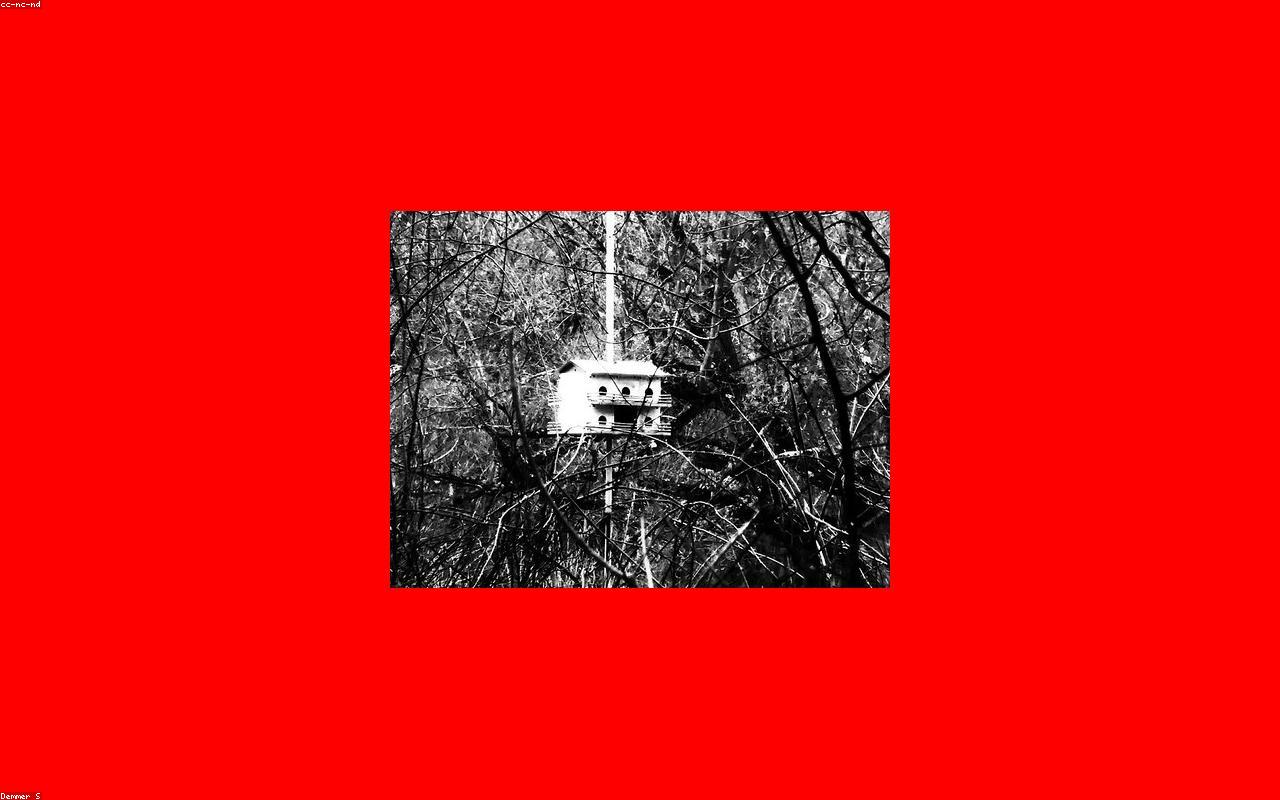
There is a temptation, in the current online market for backyard birding products, to elaborate the nest box into something architectural. Multi-chamber boxes, copper roofs, decorative cutouts. None of it improves outcomes. Some of it actively harms — perches under the entrance hole, for instance, give predators a foothold and bluebirds cannot use.
The 1978 plan is the 1978 plan because the species and the predators and the weather have not meaningfully changed in fifty years. The box that works is the box that has always worked. Wieting's contribution is to build it cleanly, sell it cheaply, and hand each buyer a single laminated card explaining how to monitor what is now their responsibility.
His current waiting list is six weeks. He keeps building. The sawmill keeps sending cedar. Somewhere in southern Vermont, in a meadow this April, a female eastern bluebird is settling onto a clutch of four pale blue eggs in a box that looks exactly like the boxes her great-grandmothers used.