The transmission corridor runs north-south through the western Massachusetts town of Belchertown, cutting a hundred-and-twenty-metre swath through deciduous forest on its way from the Northfield Mountain pumped-storage station to the substations of the eastern grid.
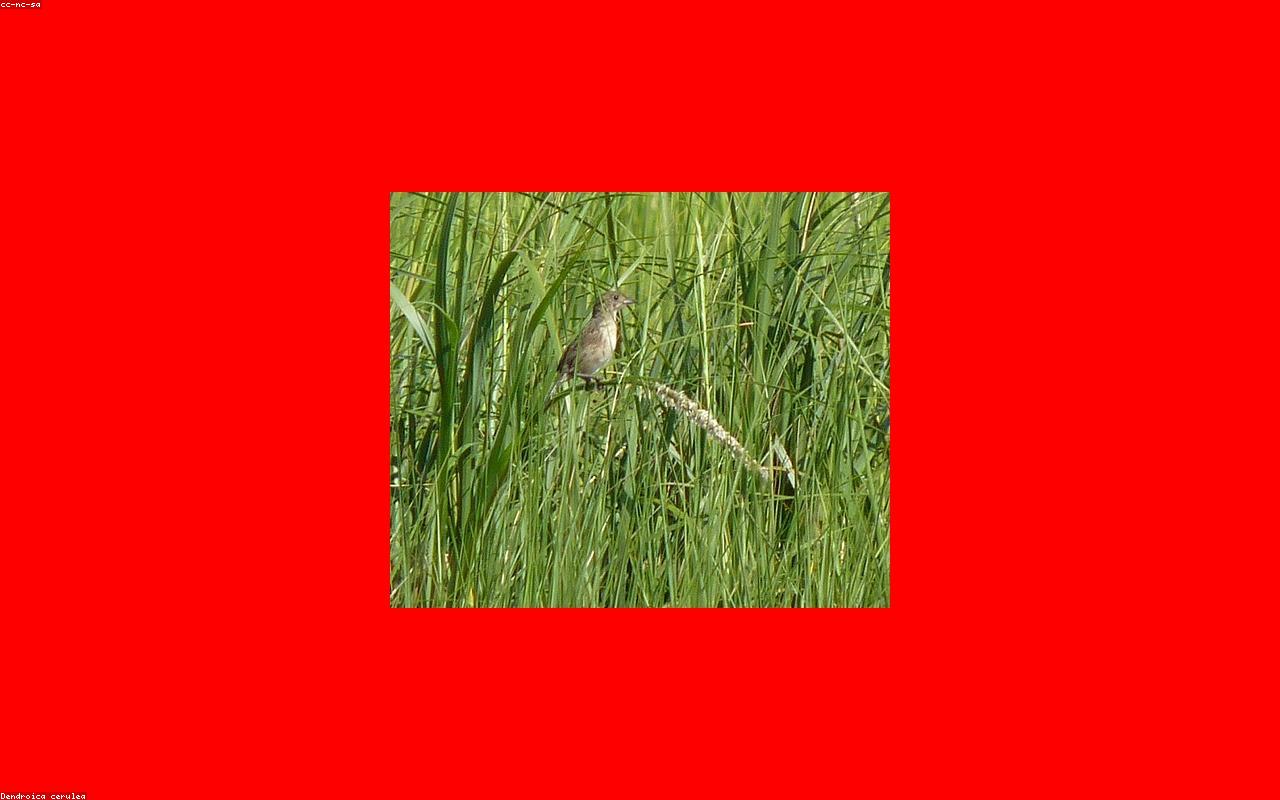
On the morning of May 22, 2026, a prairie warbler was singing from the top of a sapling sweet birch about three metres tall, growing under the wires at a point where the corridor crossed a small ridge.
Within twenty minutes, working the same kilometre of corridor, the observer had recorded eastern towhee, blue-winged warbler, chestnut-sided warbler, indigo bunting, field sparrow, and yellow-breasted chat. None of these species were singing in the closed-canopy forest on either side of the corridor.
This is not unusual. Across much of the eastern United States, transmission corridors managed on a six-to-ten-year vegetation cutting cycle now hold some of the region's best remaining habitat for early-successional shrubland and edge-grassland birds.
The pattern was first documented at scale by Robert Askins and his collaborators in the 1990s and has been substantially confirmed by a long series of subsequent studies in Connecticut, Massachusetts, New Jersey, and Pennsylvania. The 2018 work by Confer and colleagues out of Ithaca College extended it to golden-winged warbler, which has become one of the most concentrated users of well-managed corridors in the central Appalachians.
The mechanism is the cutting cycle. Transmission utilities, for engineering reasons, cannot allow trees to grow tall enough to threaten the conductors. They have therefore developed, over the past forty years, a vegetation management practice called integrated vegetation management, or IVM, that involves selectively cutting tall-growing species and encouraging a stable low-growing community of shrubs, forbs, and grasses.
Done well, IVM produces something that looks like a shrubland savanna: scattered low shrubs, dense forb cover, patches of bare ground, occasional small trees of slow-growing species. This is functionally close to the habitat that the eastern early-successional bird community evolved to use.
Done poorly, IVM produces something else: a cleared scar maintained by broadcast herbicide, with thin grass and almost no structural diversity. The poor version supports very little.
The difference, in practice, comes down to the contractor and the line manager. The utility that hires a contractor who selectively spot-treats tall-growing species, leaves the shrub layer intact, and cuts on a long rotation will produce productive habitat. The utility that hires a contractor to broadcast-mow every three years will not.
Eversource, the utility that manages the Belchertown corridor, switched its vegetation management protocol in 2014 toward a more selective IVM approach, partly in response to a partnership with the New England Wildflower Society and the Massachusetts Division of Fisheries and Wildlife. The bird response has been visible in eBird checklists from the corridor across the subsequent decade.
There are sections of the same corridor, in towns further east, where the older protocol is still in use. The bird community there is thinner and dominated by edge generalists.
Marius Doyle spent two days in May 2026 walking sections of the Eversource right-of-way and an adjacent National Grid corridor for comparison. The Eversource sections held substantially more shrubland-obligate species per kilometre than the National Grid sections, which were maintained on a shorter mow cycle.
The numbers are not yet published. The pattern is.
What makes the corridor question interesting at scale is the sheer length of the transmission system. There are roughly six hundred and forty thousand kilometres of high-voltage transmission line in the United States, with a typical corridor width of fifty to a hundred and twenty metres. The cumulative area, much of it potentially manageable as early-successional habitat, is on the order of three to five million hectares.
This is not a small number. It exceeds the total area of federal and state-managed early-successional habitat across the eastern United States combined.
The conservation community has been slow to organize around this. There are exceptions, including the Right-of-Way as Habitat Working Group based out of the University of Illinois at Chicago, and a productive partnership in New Jersey between Public Service Enterprise Group and the Audubon-led New Jersey Conserve Wildlife Foundation.
Most of the productive corridor habitat in the eastern United States, however, is being produced incidentally by line crews on routine vegetation management contracts who are not trying to produce it, and would not necessarily know if they had stopped.
This is a fragile arrangement. A change in utility procurement policy, a new herbicide protocol, a different contractor on the next cycle, can erase a productive corridor stretch in a single season.
The reverse is also true. A small change in protocol, made deliberately and held to across cycles, can convert a thin scar back into productive habitat in five to ten years.
The prairie warbler at Belchertown will be in Florida by November. It will return to the corridor in May 2027 if the corridor is still managed as it is now. Whether that is the case depends on the next vegetation contract, which is administered out of an Eversource regional office that has, so far, made the productive choice.
Doyle wrote in his notes that the prairie warbler sang continuously for the eleven minutes he stood under the wires. He also wrote that he could hear the substation transformer humming faintly, a kilometre to the south, through the bird's song.