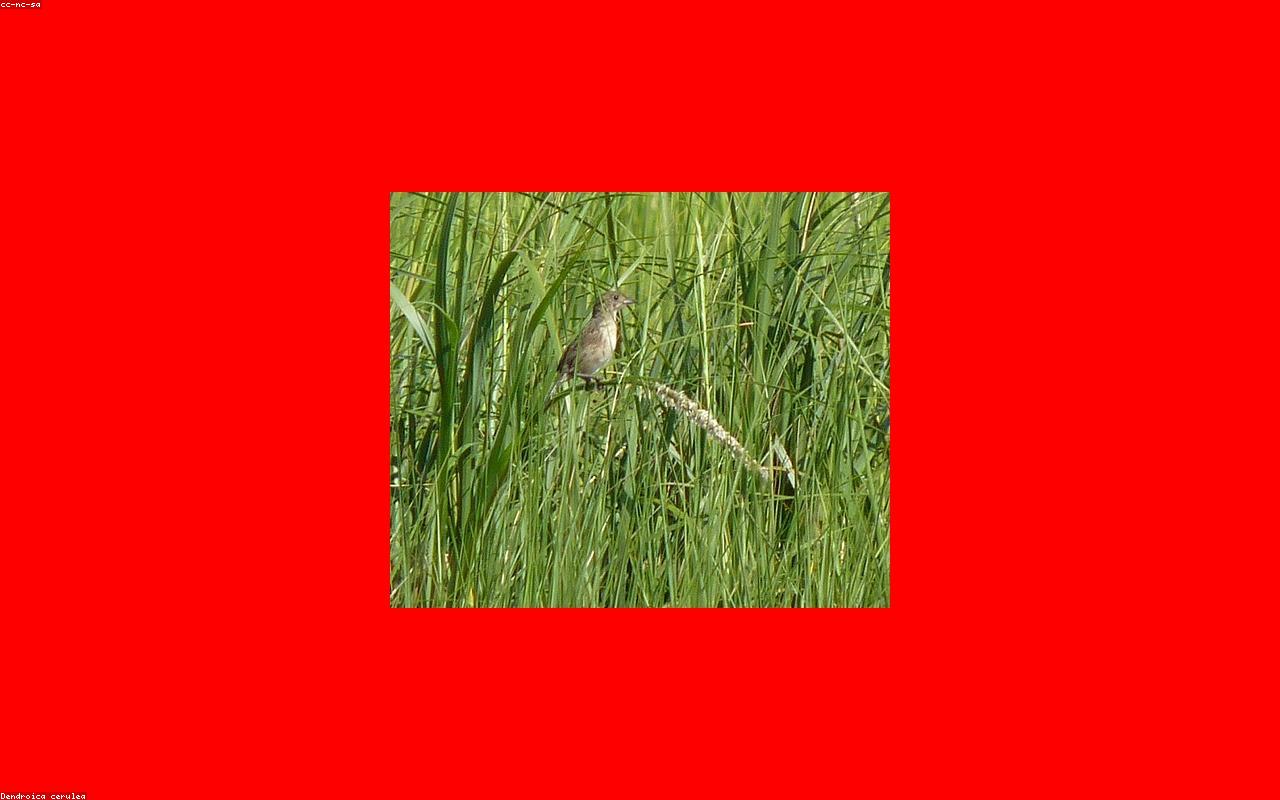
The nest sat in a tussock of Spartina patens on the high marsh at Parker River National Wildlife Refuge, on Plum Island, Massachusetts, about a hundred and twenty metres from the nearest pannes. It held four eggs on the morning of May 30, 2026.
By the afternoon of June 4, after a perigean spring tide pushed water up into the high marsh on a southeast wind, the nest was flooded. The eggs were cold. The female saltmarsh sparrow, marked with a coloured leg band from a 2024 banding session, was working a second nest site by June 7.
This is the species' situation in 2026. The saltmarsh sparrow, Ammospiza caudacuta, is the New England endemic of the high-marsh community. It nests almost exclusively in Spartina patens above the mean high water line, and its breeding biology is built around a twenty-six-day window between high-flood tides.
The window is shrinking. The species has been declining at roughly nine percent per year for the past two decades, by far the steepest decline of any North American breeding songbird, and the most credible analyses suggest a high probability of functional extinction in the wild within fifteen to twenty years if current trends continue.
The cause is sea-level rise interacting with marsh structure. The saltmarsh sparrow needs the high marsh to be high enough, and the tides to be predictable enough, that a clutch laid in early May can hatch and fledge before the next moon-driven flood tide reaches the nest.
In the early twentieth century, on the New England coast, the window between killing tides was reliably long enough to accommodate the species' nesting cycle. By the 1990s it was getting tighter. By the 2020s, the failure rate from tidal flooding on the most productive Northeast marshes was running between sixty and eighty percent.
What this looks like, on the ground, at Parker River, is a marsh that still appears intact to the casual visitor. The Spartina patens stands are still there. The water still moves through the creeks. The egrets and the willets still work the edges.
The structural change is subtler. The high marsh has been narrowing as sea level has risen and as the marsh surface has not built elevation fast enough to keep up. The flood line, where spring tides reach, has been creeping inland. The zone where saltmarsh sparrows can nest with any reasonable expectation of success has been shrinking.
Inara Khan walked the Parker River refuge marsh on June 3, 2026, with Chris Elphick, the University of Connecticut ecologist who has led much of the long-term saltmarsh sparrow research and who has been making the case for over a decade that the species needs targeted intervention if it is to persist.
Elphick's view, formed across twenty years of field work and presented bluntly in a 2023 paper in Conservation Biology, is that the species cannot be saved by general marsh restoration. It needs specific high-marsh elevation work, on specific marshes, with specific engineering, completed within the next decade.
The interventions exist. The most promising is what is sometimes called thin-layer placement, a technique in which dredge spoil is sprayed in a thin layer across the marsh surface to raise elevation by ten to thirty centimetres. Done carefully, on the right substrate, it preserves the high-marsh vegetation while buying the marsh another twenty to forty years of elevation against rising seas.
It has been tested at small scale on a handful of marshes in New Jersey, Connecticut, and Massachusetts. The early results are encouraging. The cost is substantial. The permitting is slow.
What Elphick has been arguing for is a coordinated, region-wide thin-layer placement program targeting the ten to fifteen marshes in the Northeast that still hold significant saltmarsh sparrow populations, with the work completed by 2035.
This is not a small project. It would require federal coordination through US Fish and Wildlife Service and NOAA, working with state agencies and the Army Corps of Engineers, with a coordinated permitting framework that does not currently exist. The total cost has been estimated at between four hundred million and one billion dollars.
It is also probably the only intervention that would work. The species has nowhere to retreat to. The high marsh is a thin band, and on most of the Northeast coast there is upland development immediately landward, with no room for the marsh to migrate up.
There are places where the marsh could migrate, given coordinated effort to remove or relocate development at the marsh edge. This is sometimes called managed retreat. It is politically very difficult.
What is happening, instead, is a slow accumulation of small projects, demonstration thin-layer placements, and academic studies, while the species continues its nine-percent-per-year decline.
On the morning of June 5, 2026, walking the eastern edge of the Parker River marsh, Khan and Elphick recorded eleven saltmarsh sparrow territories along about three kilometres of marsh edge. The same transect in 2008 had supported thirty-four territories.
Elphick said, at the end of the walk, that he still thought the species could be held in the wild if the thin-layer work began at scale within the next three years. He said he had been saying this since 2018, and that the marshes had less margin every year.
The female sparrow at the flooded nest renested. She laid her second clutch on June 11. The next perigean spring tide is on June 27.