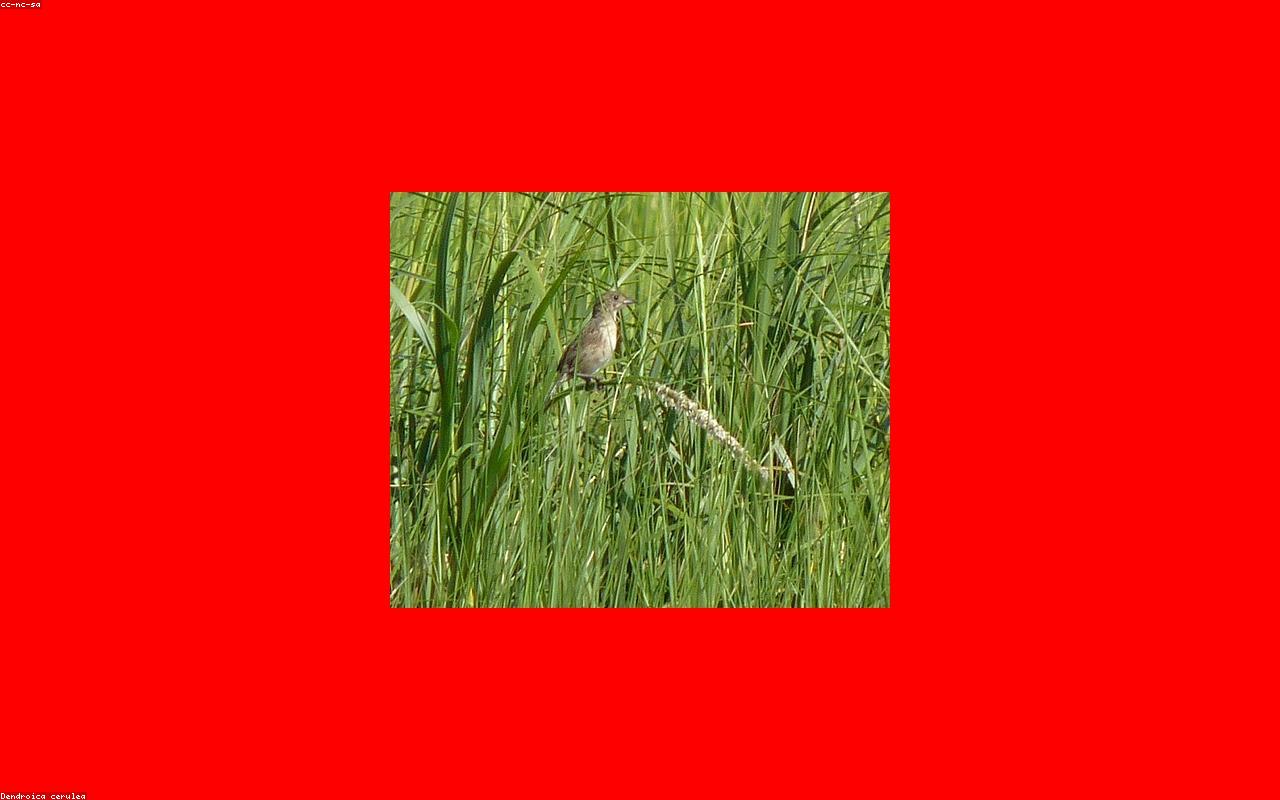
The field sparrow nest sat in a multiflora rose thicket about forty centimetres above the ground, on a five-hectare parcel of former dairy pasture in Adams County, Pennsylvania, that had not been mowed since 2019.
On June 8, 2025, the nest held four eggs. On June 19 it held four chicks. On June 27 it was empty, and the chicks had fledged, and a graduate student named Adrienne Yost, working out of Shippensburg University, wrote the word success in the green-bound notebook she had been carrying since April.
It was the thirty-first successful field sparrow nest she had recorded that summer on the thicket plots. The mowed-pasture plots, by contrast, had produced four successful nests across the same two summers, and most of those had been near the unmowed edges.
The study, which will appear in the Journal of Field Ornithology later in 2026, is small. It is also one of the cleanest recent comparisons of nesting success across the three commonest land states in the rural mid-Atlantic: mowed pasture, abandoned pasture reverting to thicket, and managed open-grown thicket maintained on a six-to-eight-year cut rotation.
Field sparrows did best in the managed thicket. Eastern towhees, prairie warblers, indigo buntings, and yellow-breasted chats all followed the same pattern. The mowed pasture, the dominant land use across much of the region, produced almost nothing.
This is not a surprise to anyone who has been paying attention to the eastern early-successional bird community since the 1990s. The pattern has been visible in Breeding Bird Survey data for thirty years. What the Yost study contributes is a clean year-on-year nest-fate comparison on three parcels within five kilometres of each other.
The implication for land owners is straightforward and, in practice, almost impossible to act on. The bird community that has lost the most ground in the eastern United States over the last fifty years is the early-successional one. The land that would support it is the land most owners want to look tidy.
Adrienne Yost's study site was loaned by a family named Hostetler, who farm an adjoining hundred and forty acres and who agreed, in 2018, to leave one five-hectare pasture unmown for the duration of a small grant. The grant funding ran out in 2022. The Hostetlers have continued to leave the pasture unmown anyway, partly because the bird study has continued.
The pasture is not a pretty piece of land by conventional measures. Multiflora rose, which is a non-native invasive in Pennsylvania, dominates the shrub layer. There are tussocks of fescue and broomsedge between the rose clumps. There are also blackberry, sumac, and a scattering of young black cherry that will, if left, eventually shade out the rose.
This is where the management question gets hard. If the parcel reverts fully to closed-canopy forest, which it will in another fifteen or twenty years without intervention, the field sparrows will leave. So will the chats and the prairie warblers and the towhees. The thicket community is a successional one and depends on disturbance.
The cleanest disturbance regime, in this part of the country, is fire. Almost no private owner will use it. The second-cleanest is rotational mowing on a six-to-eight-year cycle, leaving substantial unmown blocks at any given time. This is also not common, because most farm equipment is set up for annual mowing or none at all.
What the Hostetlers have settled on, with Yost's quiet encouragement, is a mosaic. Roughly a third of the parcel will be mown each year in early March, before nesting and before the songbird arrival, with the third rotating across a three-year cycle. The result, after one full cycle, is a patchy mosaic of one-year, two-year, and three-year cover.
This is the kind of management that does not look like management. The pasture looks neglected from the road. A neighbour asked, in 2024, whether the Hostetlers had run out of money. They had not.
The mowed-pasture parcels in Yost's comparison, by contrast, looked like the rural mid-Atlantic ideal: smooth green sward, no scrub, mowed twice a year for hay. They supported almost no breeding birds of any species, except for a few song sparrows and red-winged blackbirds along the wet edges.
There is an aesthetic problem here that the field has been slow to articulate. The most productive bird habitat in the eastern early-successional zone looks, to most rural eyes, like a problem. The least productive looks like good husbandry.
Some of this is changeable. The Audubon-led Bobolink Project in Vermont has shown that ranchers can be compensated to delay haying until nest success is achieved. Programs of this kind exist patchily across the region, but the funding is thin and the bureaucracy is thick.
The Hostetlers do not participate in any compensation program. They have left the five hectares alone for eight years on the strength of a study and a personal preference. Their daughter, who is a senior at Penn State studying wildlife biology, may take over the land eventually. She has told her parents she wants to extend the thicket management to a second pasture.
On July 14, 2025, Marius Doyle visited the Hostetler parcel with Yost. The field sparrows were on second broods. A yellow-breasted chat sang for two minutes from the top of a black cherry, then dropped into the rose and did not come up again.
Doyle wrote, in notes that have informed this piece, that the chat song was the loudest thing on the property and that nothing else within audible distance was singing. The mowed hayfield on the neighbouring parcel, he wrote, was quiet.